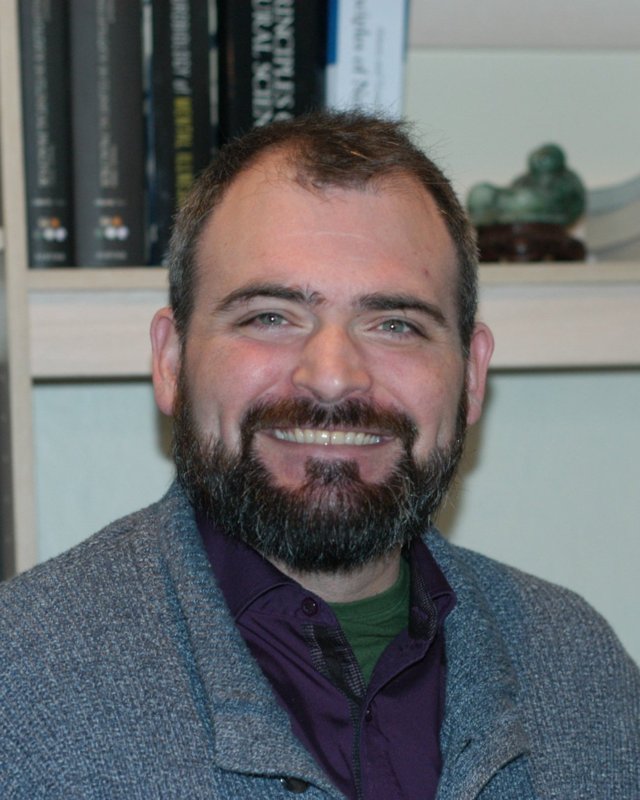
Dual board-certified in Neurology and Psychiatry — not as a combined fellowship, but as two full residencies. Most Long COVID patients need a neurologist, a psychiatrist, a dysautonomia specialist, someone who understands chronic pain, sleep medicine, and the relevant cardiology and immunology literature. That's one clinician here.
A 30-minute overview of four proposed mechanisms, why most trials have not produced recovery, and what can be done right now across the six treatable sub-syndromes.
Dr. Claunch completed full residency training in both Neurology and Psychiatry — a path taken by very few physicians precisely because of its length and rigor. That dual training was not incidental. It was the recognition, early on, that the most difficult patients are not those with isolated disorders but those who fall between specialties. The components of their illness are not neatly "neurologic" or "psychiatric" — they are patterns of dysfunction studied across neurology, psychiatry, cardiology, immunology, and internal medicine simultaneously, and a framework that pulls from only one of those literatures will miss most of the picture. The patient who has been bounced between specialists without synthesis is not poorly served because their providers were bad physicians. They are poorly served because the referral model was not designed for multi-system overlap syndromes.
His primary clinical focus is Long COVID and Myalgic Encephalomyelitis/Chronic Fatigue Syndrome (ME/CFS) — conditions that challenge the standard specialist model precisely because they are not single-system diseases. A sustained interest in general medicine, alongside his formal dual training, has kept him engaged with the cardiology literature on orthostatic physiology, the immunology literature on mast cell activation and post-viral immune dysregulation, and the autonomic medicine literature — not just the neurology and psychiatry literature that his training emphasized. His approach is to identify which sub-syndromes are present, address foundational interventions first, and layer pharmacology where the evidence supports it.
He also brings training in several psychotherapeutic traditions — cognitive, behavioral, and depth psychology approaches — that inform his understanding of the medical trauma most of his patients carry. Patients who have spent years seeking an explanation for debilitating symptoms and been repeatedly dismissed do not arrive as neutral consumers of information. That history matters clinically, and ignoring it undermines treatment.
Most of Dr. Claunch's patients have already accumulated a significant record: specialist notes, test results, medication trials, and a list of things that haven't worked. What they often haven't had is a clinician who read all of it together, listened to the full story, and tried to make sense of it as a coherent whole rather than parceling it into organ-specific problems.
He describes his approach as phenomenological — meaning that the patient's own account of their symptoms is the primary data, not just a prompt to order more tests. The diagnostic framework follows from that account, not from a template. This matters in Long COVID because the chief complaint — fatigue, brain fog, shortness of breath — is often a downstream effect of multiple distinct underlying processes. Following the chief complaint into another round of normal test results doesn't advance care. Following the sub-syndrome pattern does.
This is not an argument against testing. It is an argument for understanding what a given test can and cannot establish before ordering it — and for being honest with patients when the workup is unlikely to change the treatment approach.
Long COVID research has produced an enormous volume of mechanistic and biomarker literature. Much of it is scientifically interesting and some of it will eventually guide treatment. But a study demonstrating that a biomarker is elevated in Long COVID patients does not yet tell us how to treat them — and conclusions that run ahead of the data serve neither patients nor providers well.
This practice is guided by what placebo-controlled trials and well-controlled case series have established — drawn not only from Long COVID–specific literature (which remains limited) but from the substantial evidence base in ME/CFS, dysautonomia, fibromyalgia, migraine, and autonomic medicine. These conditions share sufficient mechanistic overlap with Long COVID to provide meaningful clinical guidance while the field matures.
Where evidence is strong, treatment recommendations follow from it. Where it is limited, that is stated explicitly rather than obscured by confident language. The goal is to help patients make informed decisions about treatments whose effects and limitations are honestly represented.
Patients often arrive having read about experimental or investigational treatments — LDN, plasmapheresis, anticoagulation, IVIG, stellate ganglion block, and others. These are worth discussing, and the data behind each can be reviewed. But this practice focuses primarily on established treatments with a meaningful evidence base, because the list of those is long enough to keep most patients meaningfully occupied before experimental options are warranted. Where investigational treatments are genuinely supported by emerging data and appropriate for a patient's presentation, they are discussed and referrals made. A curated list of ongoing clinical trials is available for patients interested in the current research landscape.
"Migraine is not a headache disorder. It is a sensory processing disorder — and it is nearly universal in Long COVID. Most providers are treating the symptom at the end of a long causal chain and wondering why nothing improves."— Dr. Joshua Claunch, MD
"The chief complaint is often where the trail goes cold. The sub-syndrome model gives you somewhere else to look — somewhere the evidence actually supports a treatment decision."— Dr. Joshua Claunch, MD
"Our failures are a consequence of many factors, but possibly one of the most important is the fact that society operates on the theory that specialization is the key to success, not realizing that specialization precludes comprehensive thinking."— Buckminster Fuller
Dysautonomia · Central Sensitization & Migraine · MCAS · Disordered Sleep · Brain Fog / PEM · Hypermobility
Insurance-based care is available for patients in Massachusetts on Aetna, Blue Cross Blue Shield, or Harvard Pilgrim. Because BCBS Massachusetts participates in the national BlueCard network, patients on most BCBS plans may also qualify regardless of which state issued their plan — check with your insurer.
Self-pay telehealth is available across all licensed states ($500/hr; superbill provided for out-of-network reimbursement requests).
Diagnostic Framework Consultations — a focused intake, written clinical summary, and follow-up — are available for patients who need a roadmap for their primary care provider to act on, rather than ongoing specialist management. Learn more →
Two books written from the same clinical framework — one for the patients navigating the system, one for the clinicians trying to help them.
A patient-focused guide to understanding Long COVID — what the sub-syndromes are, why standard workups often come back normal, and what treatment options actually exist. Written for patients who have been told their tests are normal but know something is wrong.
Available in paperback, Kindle, and Audible (audiobook was prioritized because screen exposure and sustained reading often worsen symptoms for Long COVID patients).
A 17-chapter clinical reference for PCPs and other providers managing Long COVID patients. Covers the sub-syndrome framework, evidence-based pharmacotherapy sequences, the Four Pillars approach, case vignettes, and the philosophical critique of biomarker-driven care that dominates current Long COVID literature.
Accepted for publication — forthcoming.