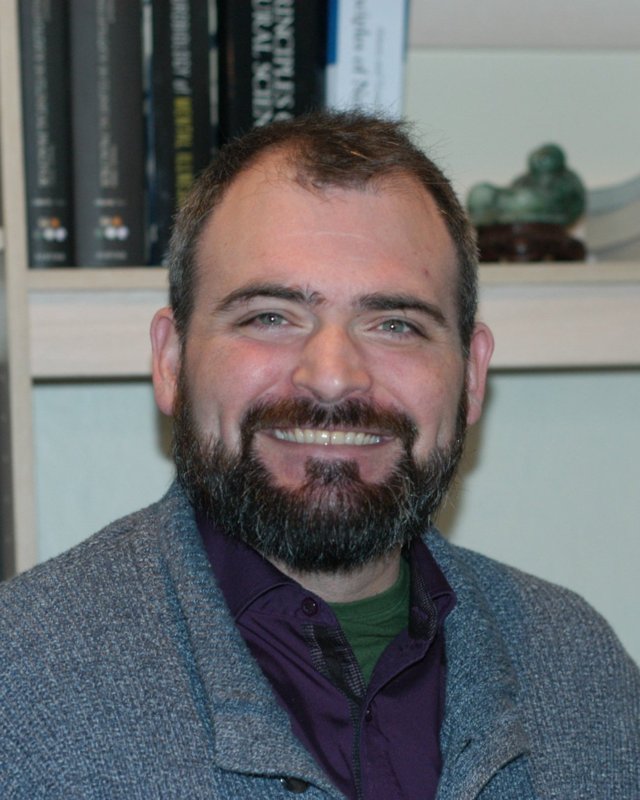
Dr. Joshua Claunch, MD
Neurologist · Psychiatrist
Understanding
Long COVID
What science tells us —
and what we can do right now
Board Certified Neurology & Psychiatry
The tests come back normal.
The patient is anything but.
65M+
estimated Long COVID cases worldwide
~80%
have normal standard lab and imaging results
ME/CFS
the closest recognized model — decades before COVID
Long COVID is not a mystery because it is rare or unpredictable. It is a mystery because medicine reached for a single cause — and there isn't one.
Four proposed mechanisms
Each supported by evidence. None sufficient alone.
CNS Neuroinflammation
Microglial activation
Immune Dysfunction
T-cell exhaustion
Mitochondrial
Dysfunction
Energy production failure
Vascular & Endothelial
Injury
Microthrombi, tone
Biomarker and mechanistic studies tell us how the system is disrupted. They cannot tell us which disruption to treat first — only treatment trials can do that.
" To establish which mechanism drives the syndrome, treatment of that mechanism must produce recovery.
That is the standard Western empirical medicine set for itself. We should hold our theories to it.
What the trials have shown
Anticoagulants / Blood Thinners
Broad extended thromboprophylaxis showed no quality-of-life improvement vs. placebo. Small targeted trials showed symptom benefit but not recovery.
Antimicrobials / Antiviral Strategies
Long-term antibiotic protocols showed no benefit over short-course treatment. Antiviral targets assume viral reservoir — not consistently demonstrated in CNS tissue.
Immunomodulators (Rituximab, Cyclophosphamide)
6-year follow-up of ME/CFS immunotherapy trials showed no sustained recovery. IVIG for small fiber neuropathy: placebo arms improved ~30%, limiting interpretability.
Metformin (COVID-OUT Trial, n=1,300+)
41% reduction in Long COVID development when taken in the first 14 days. The only intervention with statistically significant benefit. Prevention only — does not treat established Long COVID.
Which mechanism would drive all the others?
Dysfunction
The immune system regulates microglial activation, mitochondrial maintenance, vascular repair, and viral clearance. If immune dysfunction is primary, we would expect all other mechanisms to follow.
This does not mean other mechanisms are irrelevant. It means the therapeutic priority is the mechanism that most plausibly organizes the others — and that is the one to watch for future trials.
Note: This is a logical inference from the pattern of evidence — not yet a proven claim. Intellectual honesty requires the distinction.
The immune system cannot
switch modes
T-Cell Exhaustion
T-cells that should recognize and eliminate threats become unresponsive — exhausted. The peripheral immune system cannot complete its job: clearing damaged tissue, resolving inflammation, or mounting a full response to new infections.
Microglial Activation
PET scan studies in ME/CFS show diffuse microglial activation — the brain's immune cells stuck in an "alert" state. Regions of activation correlate with cognitive symptoms (hippocampus), mood (amygdala), pain (cingulate), and sleep (thalamus).
The shared dysfunction: Both T-cell exhaustion and microglial activation represent an immune system that cannot transition between functional states — it cannot clean up what's damaged while simultaneously fighting what's new.
Effective immunotherapy trials
are years away.
What this means
We do not yet have a placebo-controlled trial showing that any immunotherapy produces lasting recovery in established Long COVID. The biologics being studied are promising; the data required to act on them is not yet in hand.
What this does not mean
It does not mean nothing can be done. It means our immediate clinical task is different — and it is one where we already have both data and tools. We treat the sub-syndromes that are treatable right now.
When you properly treat the known sub-syndromes of ME/CFS/Long COVID, the immune system stabilizes. The microglia return to readiness. The disorder improves — not always completely, but meaningfully and measurably.
Six overlapping sub-syndromes
Each is treatable. Each interacts with the others.
Central Sensitization & Migraine
"Migraine is not a headache disorder. It is a sensory processing disorder that sometimes produces a headache."
Most Long COVID patients have marked sensory sensitivity — but few lead with headache. They describe brain fog, dizziness, and crashes after social events, screen time, or bright environments. These are migrainous spells.
Pharmacologic targets
SNRIs · Beta-blockers · TCAs · Anti-seizure agents · CGRP antagonists
Behavioral targets
Sensory trigger identification · Light environment modification · Pacing sensory load, not just physical activity
Every migraine tool in neurology's toolkit has potential utility here — even when the chief complaint is fatigue, not headache.
Sleep Disruption
Non-restorative sleep is nearly universal in Long COVID. Most patients oscillate between insomnia and hypersomnia — and regardless of duration, wake unrefreshed. The problem is architecture, not hours.
The Glymphatic Framework
The brain's waste-clearance system is most active during slow-wave (deep) sleep. Strong sedatives — benzodiazepines, Z-drugs, antihistamines — produce sedation at the cost of slow-wave architecture. The patient sleeps more but clears less. Brain fog follows.
Address barriers first: Adrenaline surges, pain, and circadian mismatch must be reduced before sleep-specific interventions can work.
Preferred approach
Melatonin · Sodium oxybate · Orexin antagonists · CBT-I (moved to behavioral pillar) · Fixed wake time · Light therapy · Address dysautonomia & pain first
Use with caution
Benzodiazepines · Z-drugs · Antihistamines (H1 blockers) — suppress slow-wave architecture and worsen cognitive fog despite improving sleep duration
Sleep apnea screening
OSA incidence is increased post-COVID. Hypersomnia warrants early screening before stimulants are considered.
Dysautonomia
The autonomic nervous system's volume control is dysregulated — a pattern of inappropriate responses across multiple organ systems, most conspicuously triggered by upright posture.
Heart rate / BP
POTS · Orthostatic hypotension · Adrenaline surges
Temperature
Hot flashes · Night sweats · Temperature intolerance
GI system
Gastroparesis · Constipation · Motility dysfunction
Energy regulation
Crashes without warning · Prolonged recovery
Behavioral pillars
Hydration: 3–6 g sodium daily, titrated to symptom + NASA Lean Test · Compression: thigh/pelvis/abdomen (socks are insufficient) · Recumbent exercise before upright
Pharmacologic options
Beta-blockers (propranolol, nadolol) · SNRIs (blood pressure support) · Fludrocortisone · Midodrine · Pyridostigmine
The NASA Lean Test is our primary outpatient monitoring tool — tracking response over time under naturalistic conditions.
Immune Sensitivities & Muscular Dysfunction
Immune Sensitivities
The immune system is exhausted — not absent. It takes longer to resolve new infections, over-reacts to triggers, and can worsen pre-existing asthma or introduce new intolerances. Food sensitivities — gluten, dairy, mold, dust — frequently emerge or worsen.
Practical approach
Systematic food trigger identification · Environmental allergy management · Biologic consideration (omalizumab, dupilumab) when criteria met · Treat any newly identified autoimmune disorder
Muscular Dysfunction
Generalized weakness and wasting that exceeds what deconditioning alone explains. Fatigue is qualitatively different — disproportionate, delayed, and slow to resolve.
Important caveat
Graded exercise is contraindicated before dysautonomia and central sensitization are addressed. Pushing through worsens the syndrome. Gentle, recumbent, structured activity — introduced carefully after stabilization — is the path.
Neurocognitive Dysfunction
Long COVID amplifies what was already there. Patients who managed mild depression find it severe. Patients with mild ADHD find it disabling. The neuroinflammatory state lowers the threshold for all cognitive load.
Brain fog is not vague. It typically reflects one or more identifiable contributors: migrainous cognitive disruption, poor sleep architecture, orthostatic cerebral hypoperfusion, or microglial activation — each with a distinct treatment target.
Depression, amplified
SNRIs preferred (dual benefit: mood + pain + dysautonomia) · Avoid sedating agents that worsen cognitive architecture · Address sleep before attributing mood to primary MDD
ADHD, amplified
Stimulants may be appropriate but must be introduced after dysautonomia stabilization — sympathomimetic load requires careful monitoring.
Formal neuropsychological testing
Most patients perform within normal limits. The dysfunction is real but reflects dysregulation, not fixed domain-specific damage — relevant for both treatment and disability documentation.
Treatment creates a cascade
Each sub-syndrome that improves creates downstream benefit for the others.
The sub-syndromes are a connected system. Treatment anywhere in the chain sends benefit in both directions.
Behavioral pillars + some targeted medications
Four Behavioral Pillars
Some Targeted Medications
Central Sensitization → SNRIs, beta-blockers, TCAs, anti-seizure agents
Sleep → Melatonin, sodium oxybate, orexin antagonists
Dysautonomia → Beta-blockers, fludrocortisone, midodrine, pyridostigmine
Neurocognitive → SNRIs (preferred), stimulants (after stabilization)
What recovery actually looks like
📉
Stabilization
Patients who had declined consistently year over year begin to hold ground. The trajectory of worsening stops — often within weeks of addressing the primary sub-syndromes.
📈
Gradual improvement
Function expands slowly. Crashes become less frequent, shorter in duration, and less severe. Medication burden often decreases as the system stabilizes.
🗓️
More real days
Patients describe more days that feel like living — not just surviving. The ceiling of their capacity rises, even if slowly. Some return to work or meaningful activity.
Long COVID cannot currently be cured in the traditional sense. But the same is true of heart disease, metabolic disorders, and many cancers — and we manage those well. The standard should be meaningful, measurable improvement in function and quality of life.
"Trial and pivot" —
not trial and error.
We pivot on evidence, not failure
Every medication or behavioral intervention tells us something. When something doesn't work, we learn which target needs adjustment — we don't conclude that nothing works.
We do not push through
Graded exercise and exertion challenges worsen this syndrome when applied before the underlying dysautonomia and sensory dysregulation are addressed. The evidence does not support the "push through" model.
Partner — not gatekeeper
Your insights about your own body are data. This is a collaboration between a patient who knows their illness intimately and a physician who knows the science — both perspectives are necessary.
Rocky
" If I can convince you of one thing: ME/CFS and Long COVID are treatable — even when the Long COVID clinic at your local academic center says there is no cure.
Website
LongCOVIDDoc.com
Care
Telehealth · 10 licensed states
Out-of-network · superbills for ongoing care
Long COVID Tracker App
🦝 Track with Rocky
long-covid-app.netlify.app
Telehealth only · practicalneuropsychiatry@gmail.com · Dr. Joshua Claunch, MD · Board Certified Neurology & Psychiatry