A working library for patients navigating Long COVID and for the providers who care for them — grounded in what the trial data actually supports.
Both books emerged from the same clinical problem: too much published complexity, too little actionable guidance for the people who need it most.
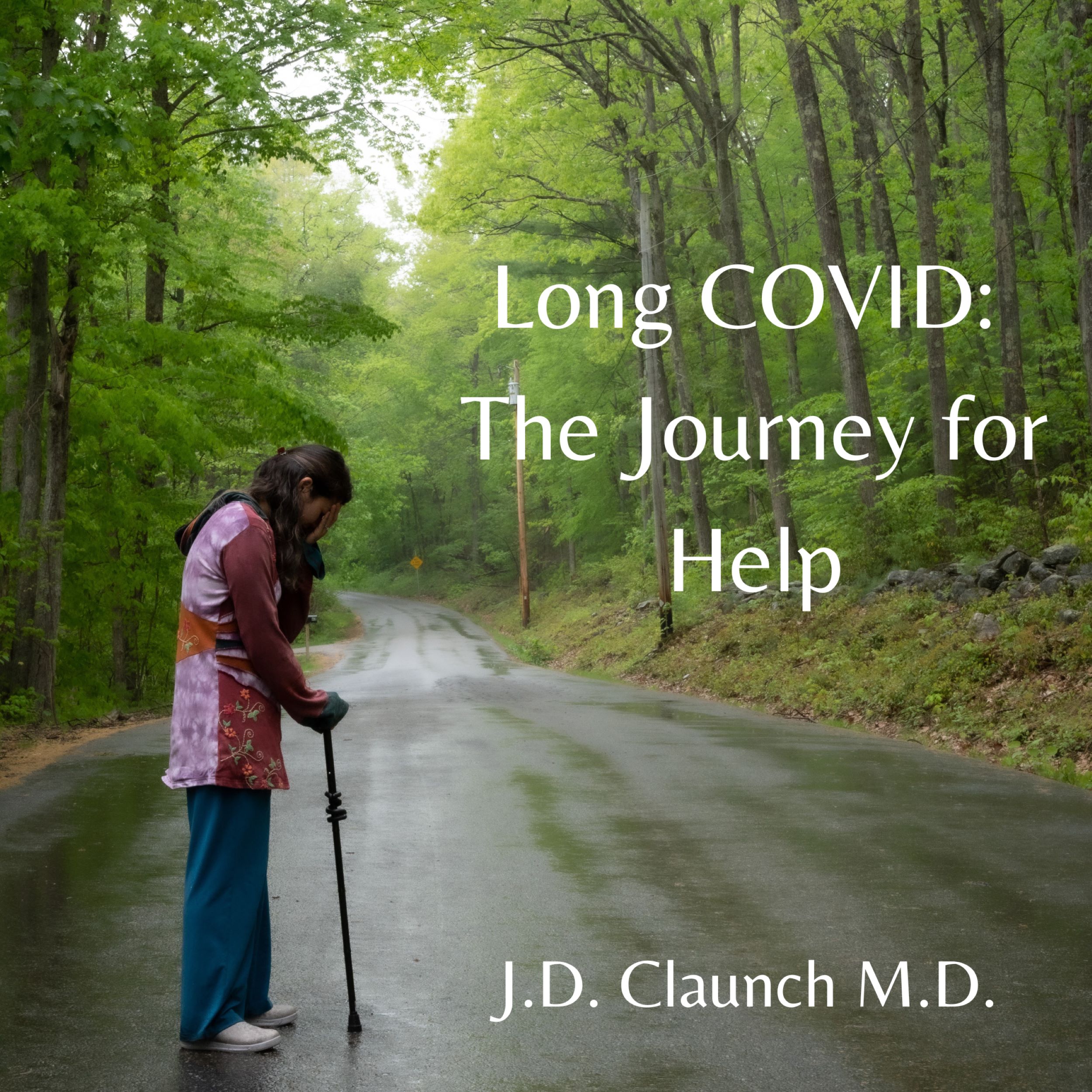
Most Long COVID patients arrive at a specialist after months or years of being told their tests are normal. This book starts from that experience rather than from a diagnostic algorithm. It covers how Long COVID's component syndromes work, what the treatment evidence actually shows, and how patients can work with their providers to build a coherent plan — without needing a neurology or cardiology background to follow the argument.
Get the Book on Amazon →Seventeen chapters organized around the sub-syndrome framework: dysautonomia, central sensitization, MCAS, disordered sleep, brain fog, and hypermobility — each with evidence-based pharmacotherapy sequences, case vignettes, and a critique of where the current literature's conclusions outrun its data. The goal is a reference a primary care provider can actually use between appointments, not a review article that recites mechanisms without reaching clinical conclusions.
Notify Me When Available →Each article addresses a topic where the published evidence supports specific clinical decisions, not just further workup. Written to be useful at both ends of the clinical encounter.
Looking for information on LDN, ivabradine, guanfacine, metformin, or other treatments being discussed in the Long COVID community? Treatments in the Conversation →
The three-lever framework — water volume, sodium supplementation, and compression — and why sequencing generally matters before starting pharmacotherapy for orthostatic intolerance.
Patients & Providers Read → Assessment ToolOffice- or home-based orthostatic intolerance quantification. Three key metrics: resting heart rate, orthostatic increment at 10 minutes, peak heart rate. No tilt table required.
Patients & Providers Read → Treatment EvidenceControlled trial data supporting consideration of one of the more underutilized interventions — with a plausible mechanism, a well-established safety profile, and the strongest prevention signal in the published literature.
Providers Read → PEM / CrashesOrthostatic, migrainous, and true post-exertional crashes often respond to different interventions. Distinguishing the pattern tends to change management substantially — and changes what "rest" means in practice.
Patients & Providers Read → Sleep MedicineFive distinct entities — insomnia, non-restorative sleep, circadian dysregulation, hypersomnia, and sleep-disordered breathing — each worth evaluating separately. Treating sleep early has disproportionate downstream effects.
Patients & Providers Read → Activity ManagementThe case for staying within the energy envelope before it becomes a crash — and why the framing of "graded exercise" is not interchangeable with pacing when dysautonomia or PEM are present.
Patients & Providers Read →A curated, live feed of interventional trials for Long COVID and ME/CFS — pulled directly from ClinicalTrials.gov and filtered to exclude purely observational or biomarker studies. Browse by treatment type: biologics, antimicrobials, supplements, behavioral interventions, devices, and medications.
Presence on the list is not an endorsement. Trial data guides what questions are being asked; it does not settle what has been shown to work.